Core Concepts
Docana has five building blocks. Once you know them, every screen in the platform makes sense.
Libraries and Collections
Your documents need a home. A collection is a group of related documents, like "Sales Contracts" or "HR Policies". A library groups related collections, like folders group files.
Docana reads everything you put in a collection: PDFs, Word files, spreadsheets, presentations, images, video, audio. It indexes the text, turns spreadsheets into data your agent can query, and extracts the important parts. This is what makes everything else work. An agent is only as good as the knowledge you give it.
You can upload documents by hand, or sync them automatically from Google Drive, Dropbox, and OneDrive with connectors.
Start here: Creating a Library
Applications
An application is what your users interact with. It bundles knowledge (which collections it can read), agents (how it behaves), members (who can use it), and channels (where it shows up).
When you create one, you pick a type:
- Assistant: a chat interface backed by your knowledge. The most common choice.
- Search: a search interface over your documents, without chat.
- Document Insights: extracts structured data from documents, like pulling key terms out of every contract into a table.
- Recommendations (beta): suggests items based on your knowledge and criteria.
An application reads only the collections you give it, and it can hold several agents that work together as a team.
Learn more: Applications. Start building: Creating an Application
Agents
By default, an assistant answers questions using your knowledge. Agents give you control over how. An agent is a workflow you build visually: evaluate the user's message, branch on what you find, respond with instructions, send an email, call a webhook, generate a document, or schedule a follow-up.
Agents check their own work. You define evaluation criteria (we call them reasonings) and the agent scores its understanding against them before acting. That's why the same question gets the same quality of answer every time.
Agents are also testable, like code. You write test cases, run them, and see what breaks before your users do. See Testing Agents.
Start here: Creating an Agent
Channels
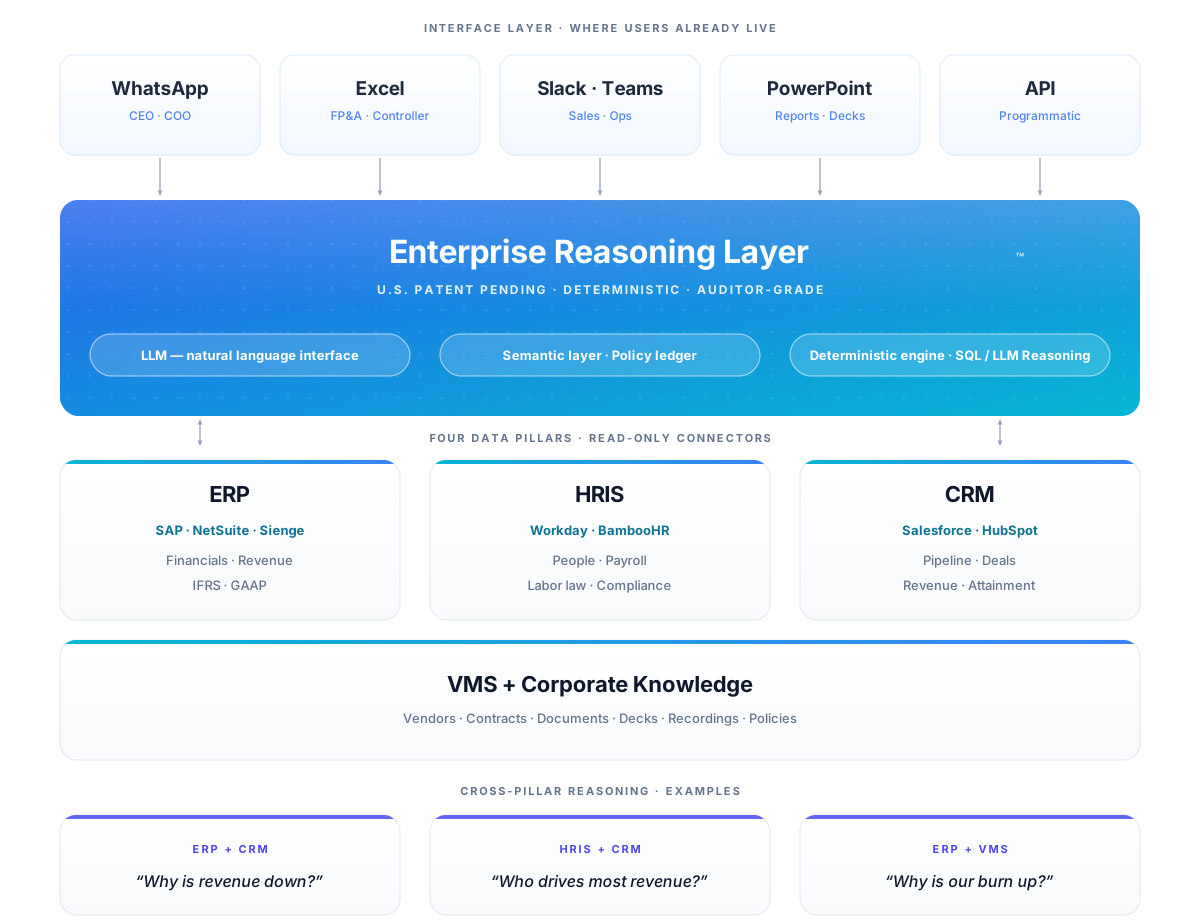
A channel is where your application meets users. Build the agent once, then turn on the channels you need:
- Web Widget for your website or app
- WhatsApp for customers
- Slack and Microsoft Teams for your team
Developers can also skip the channels and use the API directly.
Templates
Templates turn answers into documents. A document template mixes fixed text with AI prompts. When someone generates a document, Docana fills the prompts using your knowledge: contracts that pull the right clauses, reports that cite real numbers. Email templates do the same for messages agents send.
Start here: Creating a Template
Insights
Every conversation your agents handle can produce data. Turn on insights and each conversation gets a summary plus the structured data points you define: customer sentiment, resolution status, products mentioned, anything. The results show up as charts you can filter and drill into.
Start here: Conversation Insights
How It All Connects
People work in the tools they already use. Docana reasons over your company's documents and data in the middle. Answers flow back to wherever the question came from.
If You Came From docana.com
The website describes Docana in different words than the platform uses. Here's the translation:
- A super employee is an application with one or more agents behind it
- Corporate Knowledge is your libraries and collections
- The Adaptive Reasoning Engine is the agent workflow you build in the Agent Builder
- Deterministic LLM evaluations are the evaluation criteria (reasonings) agents use to check their work
Same product. The website tells you why it matters. These docs show you how to build it.